
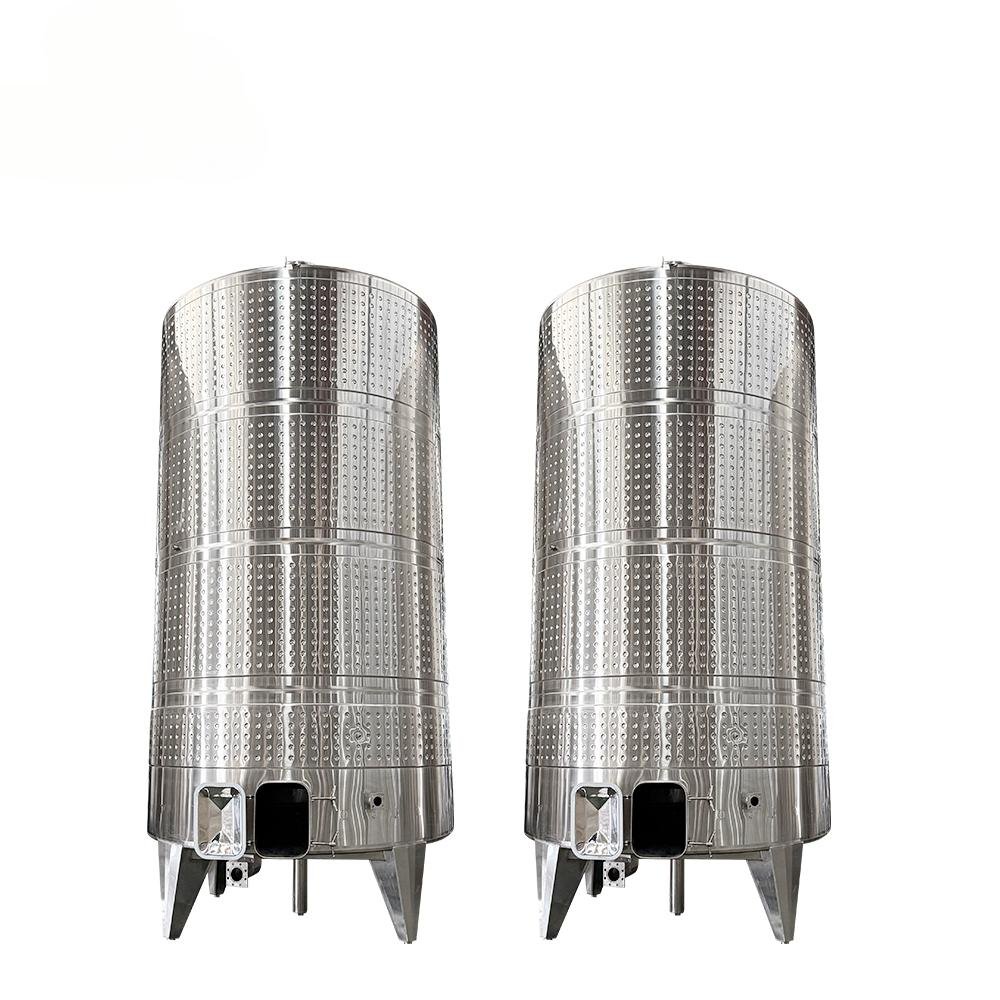
Two quotations can both describe a “2000L wine fermentation tank” and still offer quite different equipment. One vessel may be configured for pressed juice. Another may include the access and fittings needed to handle grape skins. They share a capacity label, but they will not necessarily do the same job in your cellar.
Before comparing prices, describe what will enter the tank, what happens during fermentation and how the tank will be emptied. Those three details give a supplier a much better starting point than capacity alone.
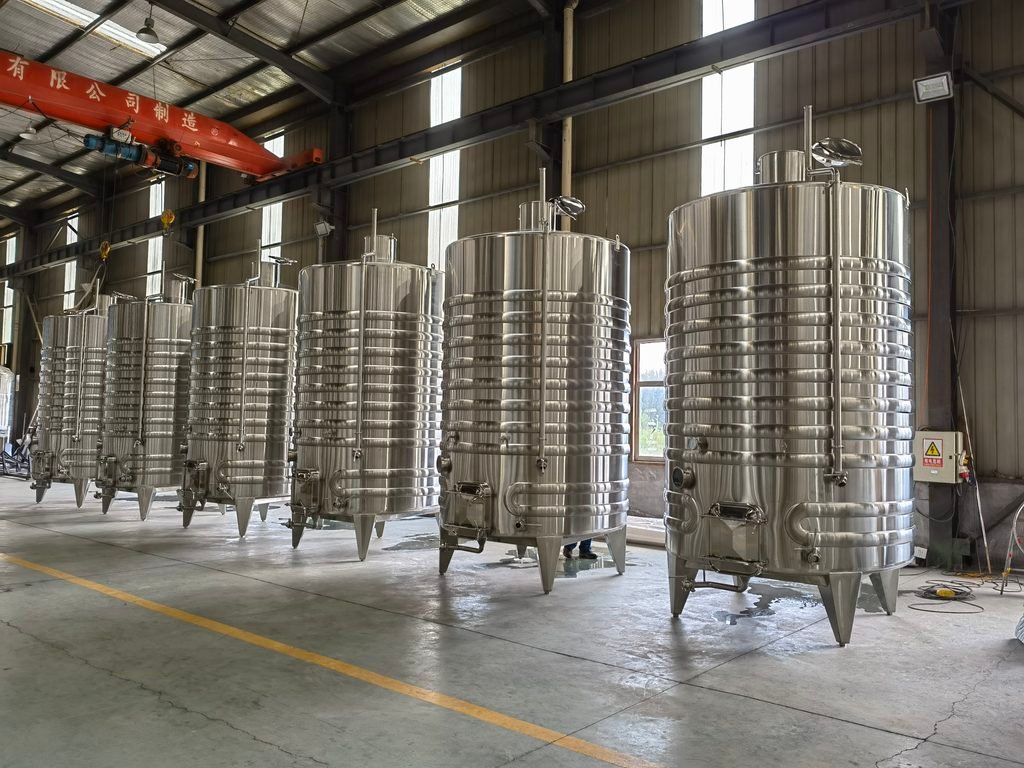
1. Confirm what the 2000L figure represents
Ask whether the quoted capacity is the total internal volume or the recommended working volume for your process. These figures should be identified separately on the quotation and drawing.
Fermentation requires space above the product. The allowance depends on the material, foaming and any cap of skins that develops. A vessel with 2000 litres of total internal volume should not automatically be ordered for a 2000-litre fermenting batch.
Be specific about your requirement: “We need to ferment 2000 litres of pressed juice per batch” is clearer than “We need a 2000L tank.” For fermentation with grape skins or fruit pulp, include those solids in the discussion. Litres of pressed juice and tonnes of incoming grapes are not interchangeable purchasing specifications.
Also state your smallest expected batch. The supplier needs to check that measurement, cooling and product outlets remain usable at that liquid level.
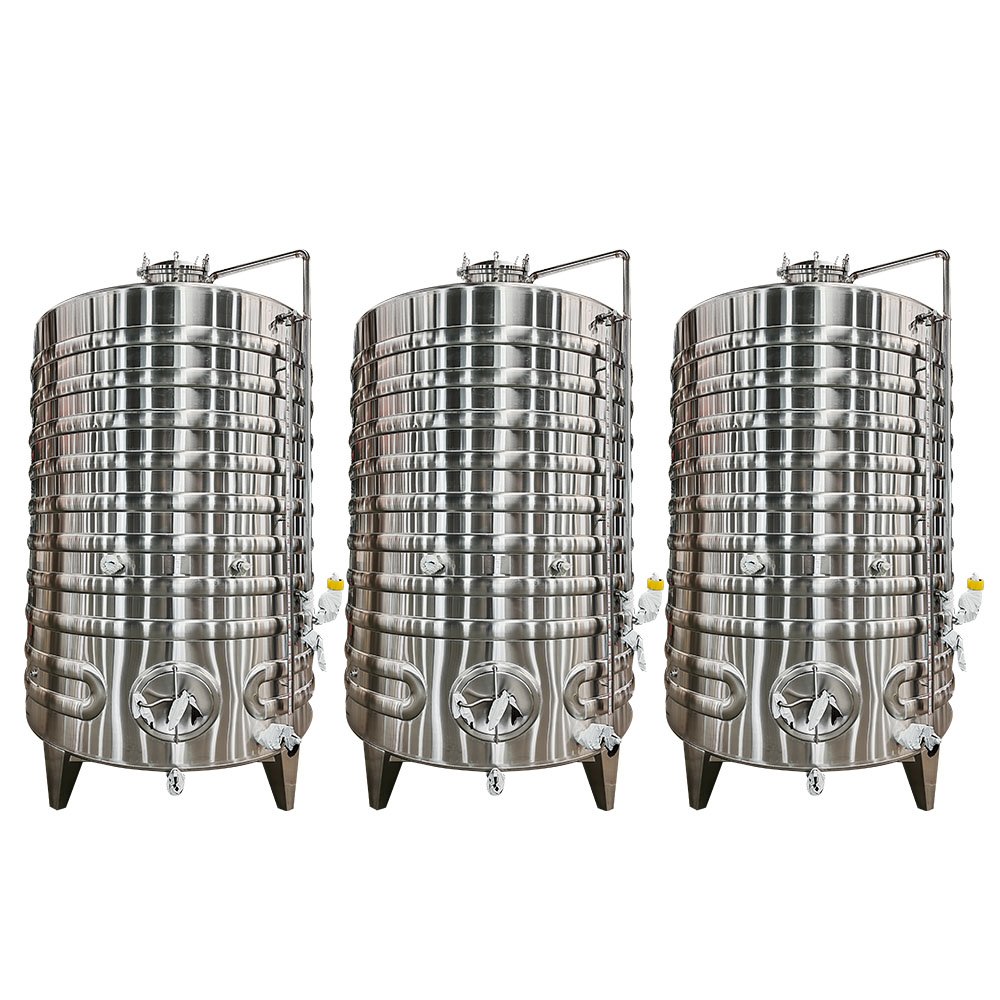
2. Match the configuration to the material and method
Wine colour alone does not define the tank. Fermenting pressed juice and fermenting grapes with their skins create different handling requirements.
| What enters the tank? | What needs particular attention? |
|---|---|
| Pressed juice, as in many white-wine processes | Temperature control, 견본 추출, racking above settled lees and a suitable headspace arrangement for any later storage. |
| Grapes or must with skins, as in many red-wine processes | Access for the chosen cap-management method, suitable circulation connections where required, and a practical route for removing pomace. |
| Fruit juice or material containing pulp | The actual solids content, particle size and how the material will pass through pumps, valves and discharge openings. |
For red wine, explain whether your process uses pump-overs, punch-downs or another approach. A tank advertised as suitable for red wine may still need different fittings to suit your method. Fruit-wine enquiries should name the fruit and describe whether the material has been pressed or contains pulp.
The lid arrangement also deserves a decision. A fixed-top vessel has a defined headspace; a variable-capacity tank uses an adjustable lid and seal to accommodate changing volumes. That can be useful when storage volumes vary, but the lid, venting and operating procedure must suit the intended fermentation and storage duties. An adjustable lid does not establish suitability for every fill level or process.
If you want one tank for several products, ask the supplier to identify any fittings or operating arrangements that must change between them.
3. Check temperature control at your actual fill levels
A cooling jacket is one part of the temperature-control system. Its position and area, the coolant supply, the temperature sensor and the control equipment all need to work together.
Ask to see the jacket position on the drawing. At a smaller batch volume, how much of the jacket is alongside liquid? Will the temperature probe remain immersed? A tank that works well when nearly full may need a different arrangement for regular smaller batches.
For cooling selection, provide your fermentation temperature, incoming product temperature, warmest cellar conditions, intended cooling time and the number of tanks that may require cooling together. Include any cold-stabilisation duty; maintaining fermentation temperature and bringing wine down to a lower temperature are different cooling jobs.
Confirm whether the quotation includes only the jacket or also the sensor, controller, control valve, insulation and connecting pipework. The cooling source itself may be a separate item.
Keep the vessel’s pressure rating separate from the jacket’s rating. A closed lid or a pressure-rated jacket does not make the wine chamber suitable for pressure fermentation or carbonation.
4. Follow the product all the way out of the tank
Imagine the final day of the batch. The wine is ready to transfer, settled material remains at the bottom, and the tank must be prepared for its next use. Can the proposed fittings handle each part of that job?
A racking outlet can allow wine to be drawn from above settled lees. A lower drain serves a different purpose: removing remaining liquid and residues. Confirm the location and purpose of each outlet rather than comparing valve counts.
For skin-contact fermentation, examine the solids-removal arrangement. Consider the manway’s size and position, the bottom shape, clearance outside the opening and where the pomace will go. A small liquid outlet is not a substitute for a suitable solids-discharge design.
Connections should match your actual hoses and pumps. Agree on the fitting standard as well as the nominal size, and identify any screens or other components needed for the proposed material. A simple drawing showing the fill, circulation, racking and drain points is useful here.
5. Ask how the tank will be cleaned
A polished exterior tells you little about access to the surfaces that contact the wine. Ask for photographs of the internal finish, welds, manway collar and outlet details, along with the specified stainless-steel grade and seal materials.
The cleaning arrangement should cover the vessel, valves, sampling points, seals and connected lines. If a spray device is included, confirm its required flow and pressure and whether your pump can supply them through the proposed circuit. A spray ball on the parts list is not evidence that the complete circuit will clean effectively.
Wine residues, colour deposits and tartrates need an appropriate cleaning procedure before sanitation. Choose chemicals and operating conditions with the equipment and chemical suppliers; a universal concentration or temperature is not a useful purchasing promise.
Ask which components need removal for cleaning and whether replacement seals are readily available. These details matter when several tanks must be turned around during harvest.
6. Compare the installed arrangement and the complete quotation
Check overall height and width with valves, legs, lid fittings and other projections included. Then check the delivery route: door openings, corners and the space needed to lift the tank into position.
Leave access for sampling, opening the manway, 청소, servicing fittings and removing solids. A tank may fit its marked floor position while leaving too little room to use it properly.
If the standard dimensions do not fit, discuss an alternative geometry before manufacturing. Changes to height and diameter should be reviewed alongside access, cooling and your winemaking method.
Finally, put quotations against the same supply list. Check the lid, manways, valves, instruments, cooling controls, cleaning fittings, packing and documentation. Identify the separate costs and responsibilities for freight, unloading, installation and utility connections.
For an outdoor location, provide local weather conditions and the proposed foundation and service arrangements. Suitability for outdoor use needs to be confirmed for that installation.
Requesting a 2000L wine fermentation tank from UNMAR
UNMAR can discuss tank dimensions and configurations around your process and available space. For an initial proposal, send:
- Your installation country and city, and whether the tank will be indoors or outdoors.
- The wine or fruit product, including whether skins, seeds or pulp enter the tank.
- Required working volume, smallest batch and number of tanks.
- Fermentation method, temperature requirements and existing cooling equipment.
- A layout sketch, access dimensions and photographs of the proposed location.
- The date when you need the equipment ready for use.
If you already have a tank that works well, photographs of its fittings and a note about what you would change are especially helpful. The aim is to agree on a configuration that fits the way you make wine, then compare a quotation with a clearly defined scope.
이메일 info@unmaret.com to discuss your 2000L wine fermentation tank requirements and request a quotation.