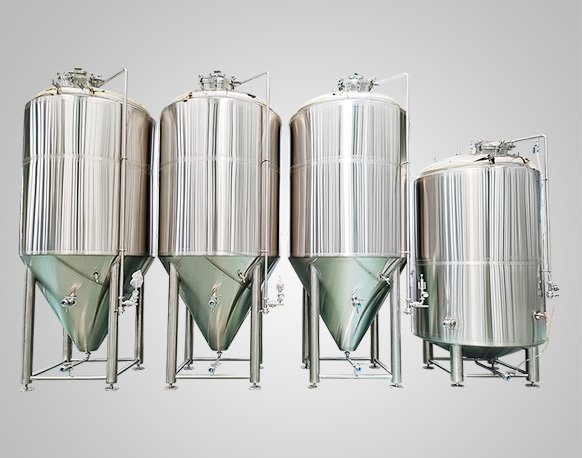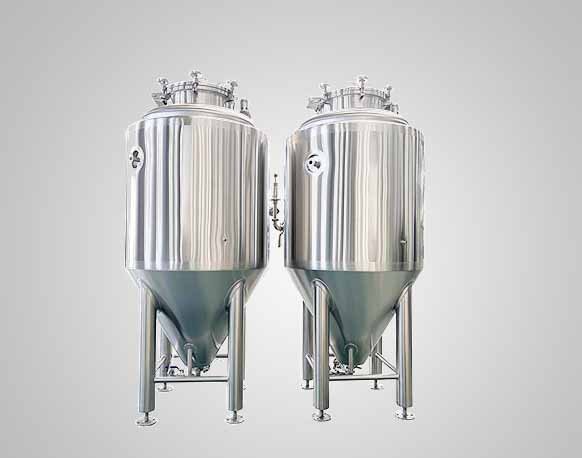
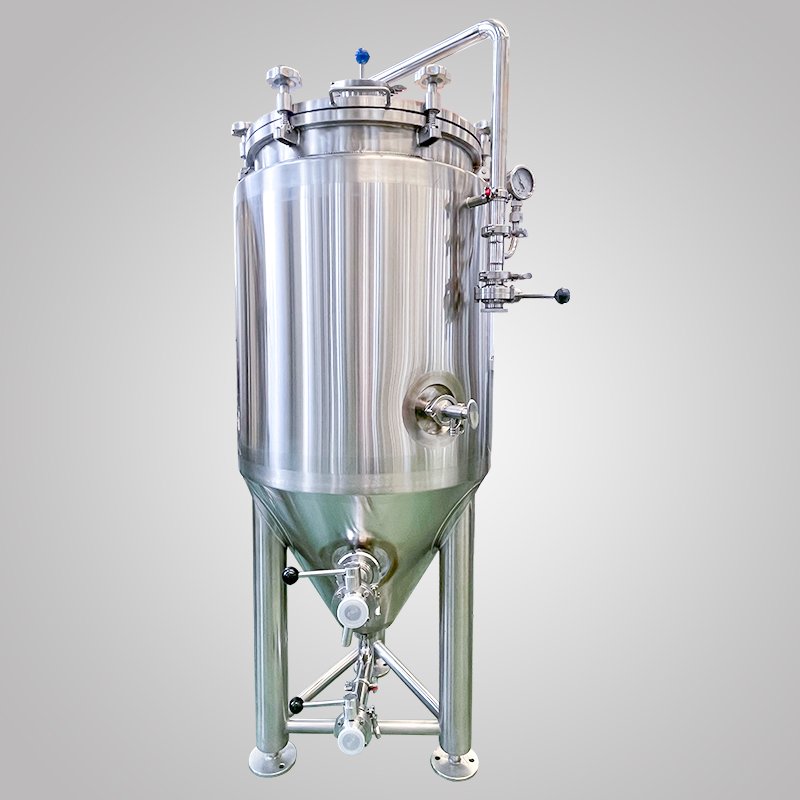
Equipment Overview
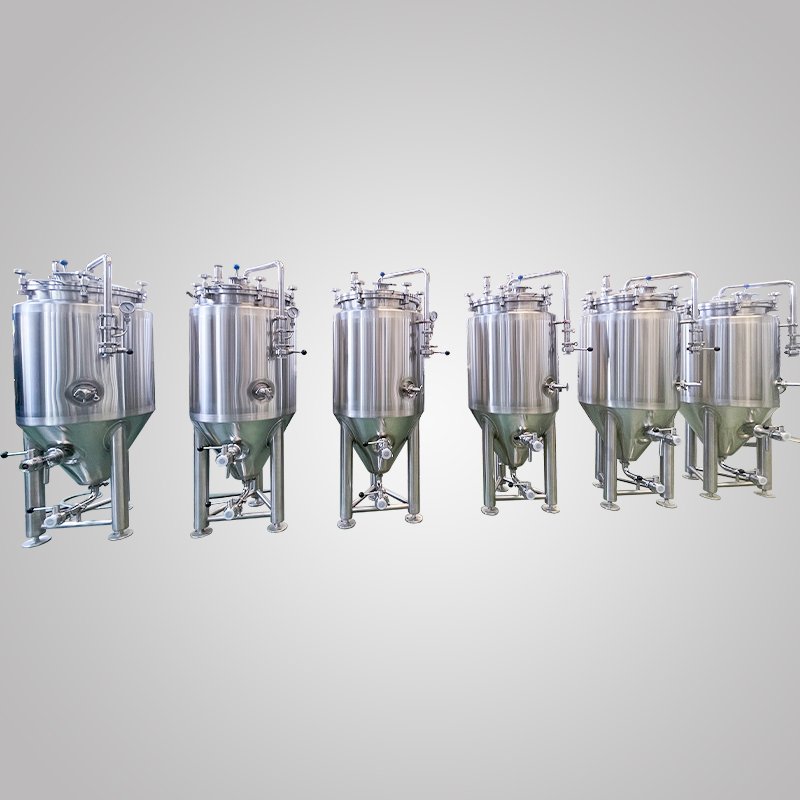
A 100L beer fermenter should be selected around the recipe process, target fill level and the time the vessel remains occupied. Describe the temperature-control and handling requirements so its role in the complete production schedule is clear.
Applications & Process
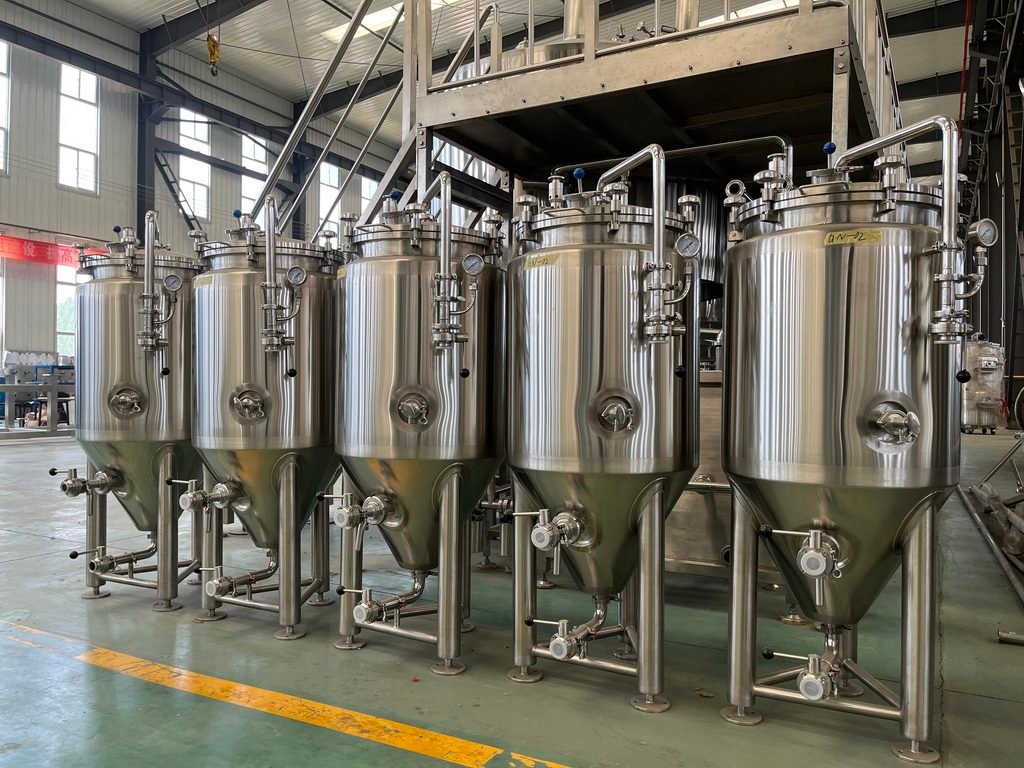
Plan this vessel around the beverage, fermentation method and intended batch volume. Fermentation, conditioning and storage impose different operating requirements. A tank list should identify the duty of each vessel, the time it remains occupied and the transfer steps between batches.
Configuration Options
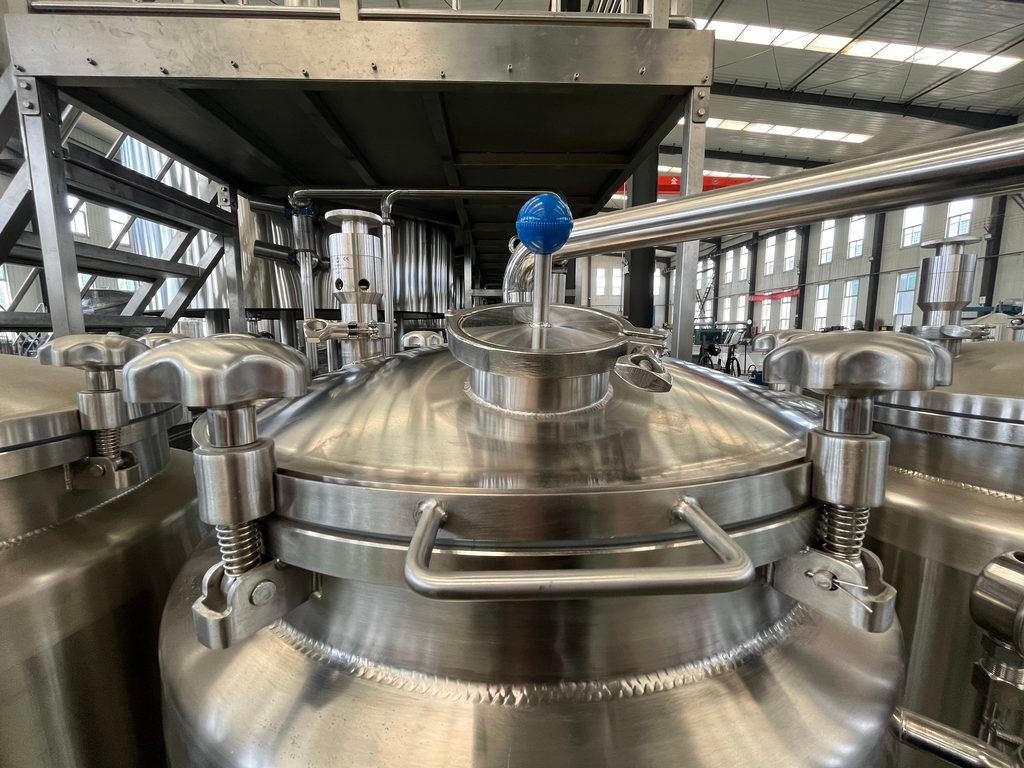
The following are options to discuss for your project. Only the equipment and features identified in the agreed quotation are included.
- Working volume, headspace and operating duty.
- Cooling jacket, monitoring and pressure requirements.
- Valves, sampling, cleaning and transfer interfaces.
Selection & Layout
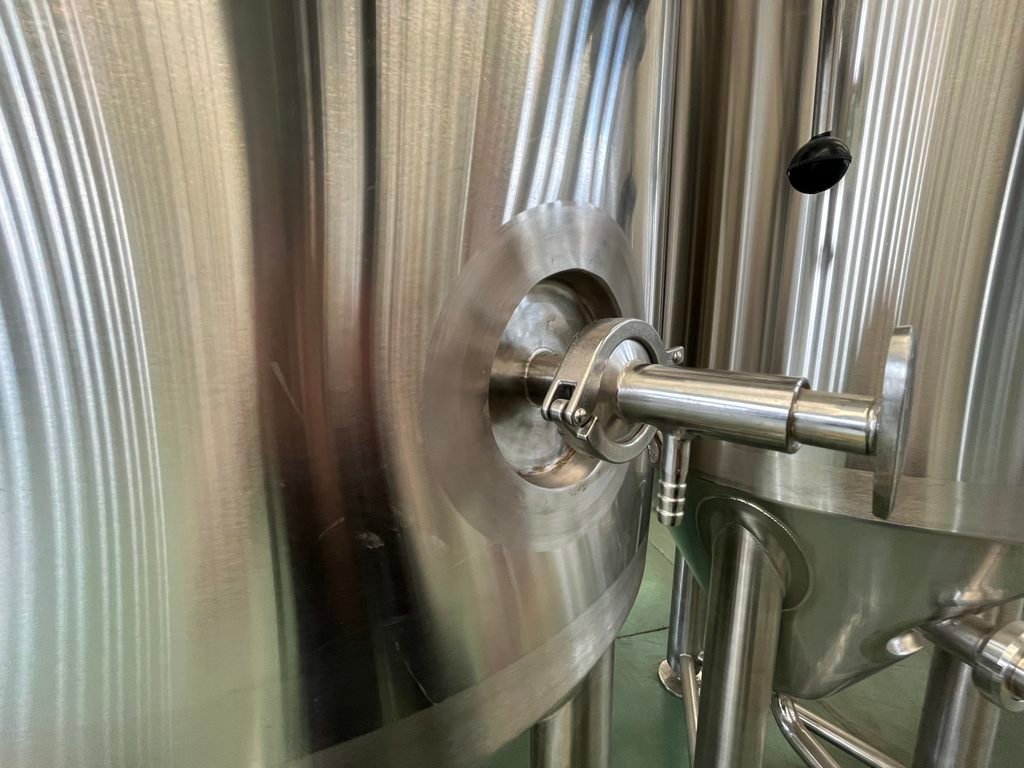
Match the tank quantity to the fermentation schedule. Consider clearance for access, piping and cleaning as well as the vessel dimensions. Any intended pressure, vacuum or carbonation duty must be stated explicitly and confirmed in the vessel design.
Cleaning, Utilities & Connections
Identify the cooling circuit, transfer connections and cleaning method. If yeast, sediment or solids need to be removed, explain the handling procedure. Share any existing connection standards so the tank can be reviewed together with your process lines.
Prepare Your Equipment Inquiry
Beer style, fill volume, fermentation time, cooling conditions and site connections. Include drawings or photos of existing equipment if the new item must connect to your current process.
Frequently Asked Questions
Can this tank also be used for conditioning or storage?
List every intended duty, including temperature and operating conditions. Suitability depends on the confirmed design and production schedule; a fermentation tank should not be assumed to perform every downstream function.
What information is useful for an existing brewery?
Send the current tank drawings, connection details, cleaning procedure and cooling supply information. Include the batch size and schedule so both process compatibility and tank quantities can be discussed.