
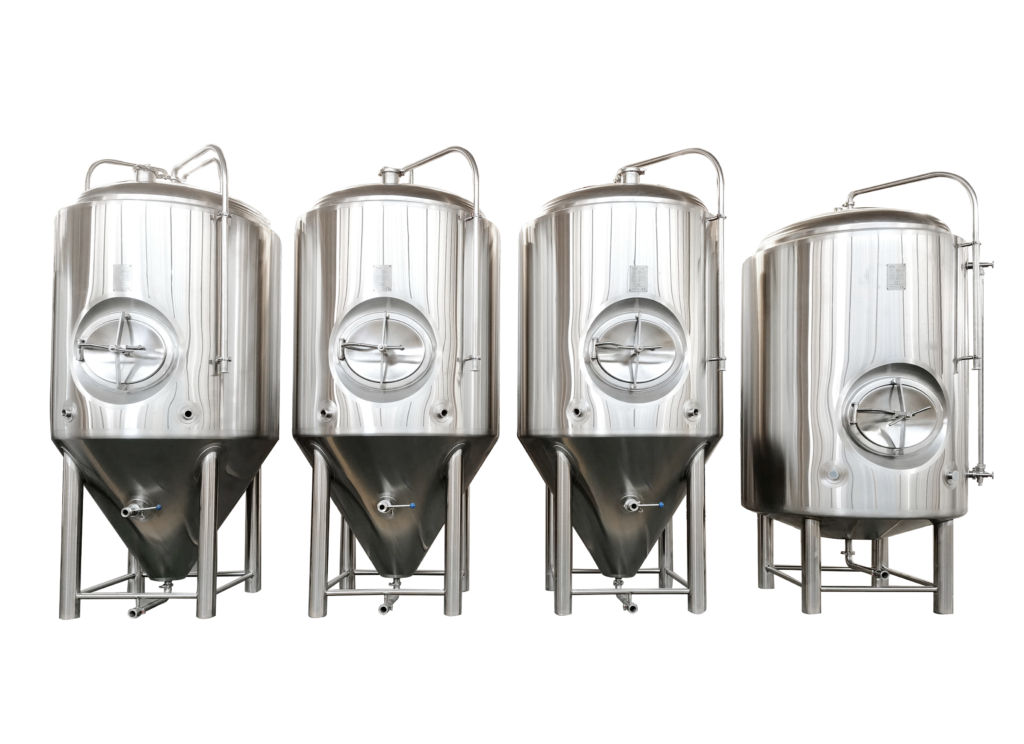
Your brewhouse can make another batch, but every fermenter is occupied. Before ordering a larger brewing system, it is worth checking whether more fermentation capacity would let you use the equipment you already have.
Adding beer fermentation tanks can be a practical next step for a small brewery or brewpub. The purchase needs to fit your production schedule, the beers you sell and the services already available on site. An empty corner of the brewery is only part of the answer.
Start with your tank calendar
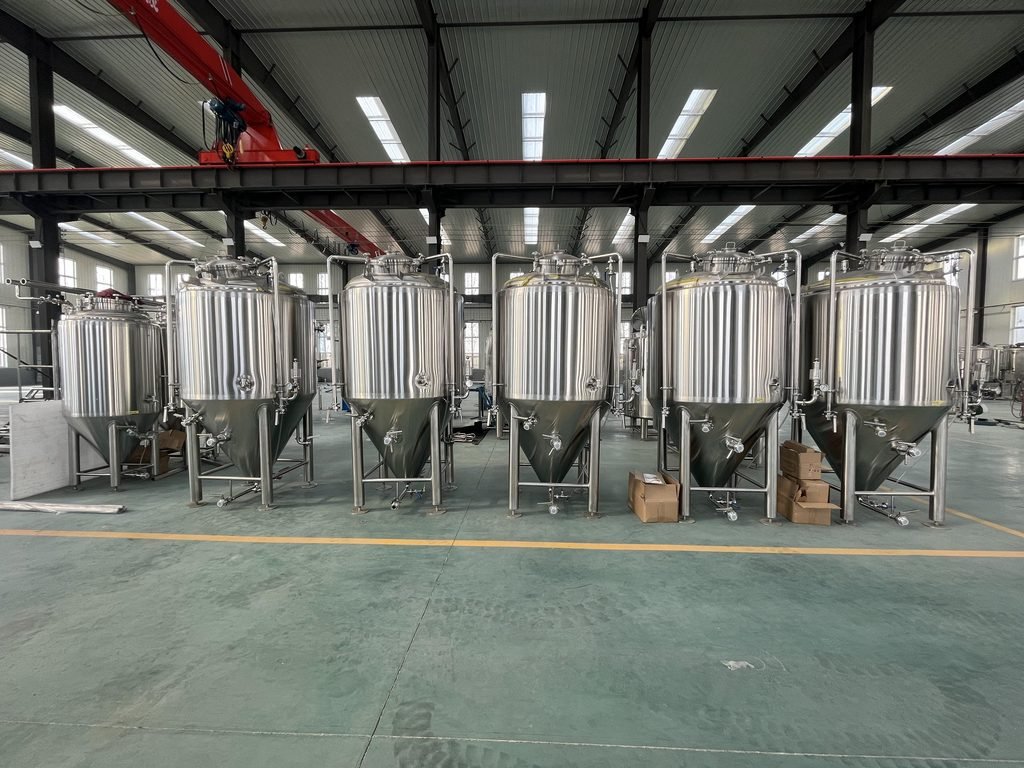
Look at several recent batches and record when each tank was filled, when the beer left and when the tank was ready to receive wort again. Include conditioning, охлаждение, transfers and cleaning wherever those activities occupy the fermenter.
If brewing is regularly delayed because no tank is available, additional fermenters may help. If beer is waiting for a packaging slot, or slow sales are keeping tanks occupied, adding vessels may simply move the same problem further along the process.
Plan around the beers you intend to produce. A tank reserved for a beer with a longer turnaround cannot be counted as freely available for the rest of the schedule.
Calculate usable volume before choosing a tank size
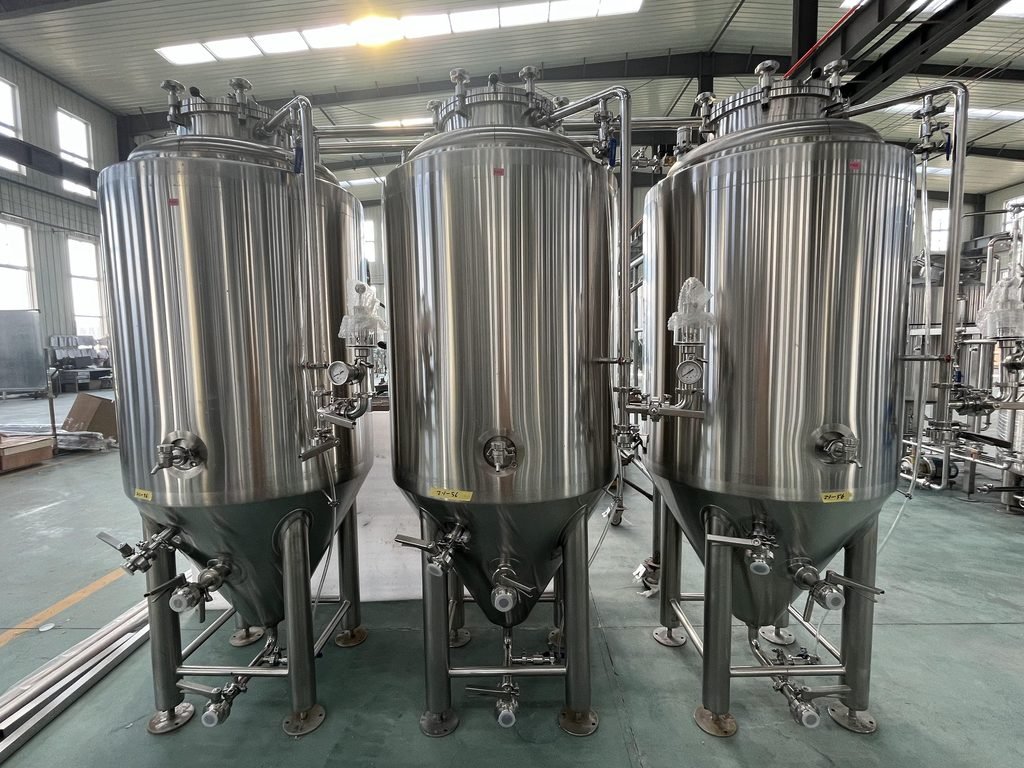
Ask suppliers to state both working volume and total internal volume. Fermentation needs headspace, so a tank with 600 litres of total internal volume should not automatically be treated as a 600-litre batch fermenter.
For planning, use the volume of cooled wort actually transferred into the fermenter. The nameplate capacity of the brewhouse and the amount of packaged beer are different measurements.
A first estimate is:
Required fermentation working volume ≈ weekly wort volume × tank occupancy in weeks
Например, assume a brewery transfers 300 litres per brew, brews four times a week and occupies each fermenter for 21 days, including the time needed to make it ready for reuse:
300 L × 4 brews per week × 3 weeks = 3,600 L of working capacity
This is an illustrative calculation, not a UNMAR customer case or a recommended fermentation time. Replace the assumptions with your own records. Deduct the usable capacity of tanks you will keep, then check the result against a calendar showing individual fills, transfers and cleaning days. Allow room for the delays your brewery actually experiences.
The result is a capacity estimate, not a forecast of saleable beer. Yeast, sediment and transfer losses still affect the finished volume.
Decide whether you need larger batches or more separate batches
Two 300-litre fermenters and one 600-litre fermenter can offer the same combined working volume. They serve different production plans.
Two smaller tanks let you ferment two beers separately or stagger production. One larger tank may suit a regular seller that you brew in greater quantities. Compare the installed dimensions and service connections too; one larger vessel is not automatically the best fit for the room.
A brewery transferring 300 litres per brew may be able to fill a fermenter with 600 litres of working capacity through two successive brews of the same beer. That arrangement needs a workable brew-day schedule. Температура сусла, filling intervals and yeast management should be agreed with the brewer before selecting the tank.
Also ask about minimum usable fill volume. A larger fermenter is not necessarily suitable for every smaller batch: temperature measurement, cooling arrangements and outlet positions must work at the intended liquid level.
For a small brewery expanding gradually, a mix of tank sizes can be useful. Keep smaller vessels for lower-volume beers and consider larger vessels for beers with dependable demand.
Measure the delivery route as carefully as the floor space
Before approving a drawing, check how the tank will enter the building. Measure door openings, corridors, corners and the available height along the route. Confirm the transport dimensions and installation method with the supplier.
At its final position, the tank needs room for more than its shell. Valves, hoses, the manway and removable cleaning equipment all need access. Check overhead clearance for servicing, and make sure the new position does not block drains or access to neighbouring equipment.
Custom dimensions can help when standard tanks do not fit. A narrower, taller tank may solve a width restriction but create a height problem. Confirm the whole arrangement on the layout before manufacturing starts.
Check cooling, cleaning and connections
An expansion can put demands on equipment that has worked well so far. Check the shared services before assuming they can support more tanks.
Охлаждение: Give the cooling supplier the existing and proposed tank volumes, fermentation temperatures, lowest target temperatures, warmest site conditions and required cooling times. Include how many tanks may need cooling at once and the length of new pipe runs. Holding beer at fermentation temperature and cooling a full tank down quickly are different duties.
Очистка: Confirm the cleaning device’s required flow and pressure, the pump’s capability and the return and drain arrangements. Consider when the added tanks will be cleaned and whether that clashes with other work. More tanks also mean more cleaning time.
Connections and intended use: Agree on product outlets, выборка, cooling connections, temperature sensors and cleaning fittings. If the tank will also be used for carbonation or pressurised transfers, specify those duties and confirm the vessel’s rated limits, relief devices and documentation. A matching connection does not establish a matching pressure rating.
Any added pumps, controls or chillers must suit the site’s voltage, частота, phase and available electrical capacity. Send the supply details before the equipment configuration is finalised.
When indoor space runs out
Outdoor fermentation tanks can be considered when there is suitable space outside the brewery. The installation needs to be designed for that location from the start.
Discuss local summer and winter conditions, изоляция, exposed pipework, weather protection for controls, drainage, foundations and maintenance access. The assessment should also cover structural loads, such as wind, and the requirements for the site. Moving an indoor tank outside without checking these conditions can create problems that were absent from the original design.
UNMAR has delivered outdoor fermentation tanks. For an outdoor expansion enquiry, include photographs of the proposed location and its climate conditions as well as the requested tank capacity.
Compare the full supply scope
Before comparing prices, check what each quotation includes. Valves, instruments, cleaning fittings, cooling controls and packing may be listed differently by different suppliers.
Add the costs of freight, unloading, installation and any changes to cooling, piping or electrical services to your budget. Ask who is responsible for each part. Plan the connection work around production, especially if existing services must be interrupted.
The useful comparison is the equipment and work needed to put the tank into service, rather than the vessel price alone.
Planning an additional tank with UNMAR
UNMAR can discuss fermentation tank dimensions and configurations around your brewery’s available space and process requirements. To start, send a short project brief:
- Installation country and city.
- Actual wort volume per brew and planned brewing frequency.
- Sizes and quantities of existing tanks, plus the capacity you want to add.
- Main beer styles and expected tank turnaround times.
- A layout sketch, door dimensions and available ceiling height.
- Cooling equipment details and the intended date for putting the new tanks into use.
You do not need a complete engineering package to make the first enquiry. A simple sketch and clear photographs of the room, existing tanks and cooling equipment provide a useful starting point.
Contact UNMAR at info@unmaret.com to discuss your brewery expansion and request a tank configuration and quotation.